
Last Updated: February 2026
Right now, Bitcoin is down roughly 47% from its October 2025 all-time high of $126,000. It’s trading around $67,000. The Fear and Greed Index is sitting at historic lows. Headlines are screaming about a crypto winter. People are panicking.
And I’m buying more.
Let me be direct with you: as a small family business owner who’s been dollar-cost averaging Bitcoin since 2017 — nearly a decade now — I’ve seen this movie before. Three times, actually. And every single time, the business owners who panicked and sold lost money, while those who kept buying through the fear came out ahead.
But this article isn’t about convincing you that Bitcoin’s price will recover (though the data overwhelmingly suggests it will). This article is about a different risk — one that nobody talks about — the “Bitcoin Risk” of doing nothing while inflation quietly destroys the profits you’ve worked your entire life to build.
What’s Happening Right Now (February 2026)
Let’s acknowledge the elephant in the room. Bitcoin peaked at approximately $126,000 in October 2025 and has since fallen to the mid-$60,000s — a drawdown of nearly 50%. On February 5th alone, Bitcoin dropped over 10% in a single day, the steepest one-day decline since the FTX collapse in 2022. Over $16 billion in leveraged positions were liquidated. Spot Bitcoin ETF outflows exceeded $1.5 billion in a single week.
It looks terrifying. I get it.
But here’s what the data actually tells us: according to analysis from VanEck and multiple market researchers, Bitcoin has recovered to a new all-time high after every single 40-50% correction recorded since 2014. Not most of them. All of them. The average recovery time within this correction range is 9 to 14 months, and the average trough-to-new-high multiple sits at approximately 3.4 times the low.
What’s also notable is that Bitcoin’s maximum drawdown severity has been declining each cycle. The 2018 bear market saw an 84% decline. The 2022 cycle dropped 77%. This cycle’s largest drawdown sits near 50%. That pattern suggests growing market depth and stronger structural demand over time.
Here’s another critical data point: the current drawdown is characterized by what analysts call “orderly deleveraging” — leverage being reduced alongside price rather than driving a disorderly cascade. Futures open interest has dropped over 20%, shedding excess speculative heat. This isn’t a structural failure. It’s the market taking a breath.
This is exactly where fear escalates — and exactly where disciplined dollar-cost averaging has historically produced the greatest long-term returns.
Why This Moment Matters for Business Owners
If you’re a Main Street business owner reading this during a Bitcoin drawdown, you’re actually in a better position than those who bought at the peak. Here’s why:
Every $500 you invest at $67,000 buys you more Bitcoin than $500 invested at $126,000. That’s not optimism — it’s math. Dollar-cost averaging works precisely because you buy more units when prices are low and fewer when prices are high. Over time, your average cost basis drops, and when the recovery comes, your returns are amplified.
I’ve lived this. In 2018, I was buying Bitcoin at $4,000 while everyone told me it was going to zero. Those purchases became some of the best investments I’ve ever made. In 2022, I bought through the crash from $69,000 to $15,500. Same result. Those purchases looked terrible for months. They looked brilliant within two years.
The business owners who win aren’t the ones who time the market perfectly. They’re the ones who show up consistently, week after week, regardless of what the price is doing.
The Five Real Risks of Bitcoin (Honest Assessment)
Every investment carries risk. Your business itself is a risk — you bet your time, money, and reputation every single day. The question isn’t whether Bitcoin has risk. The question is whether the risk is worth the potential reward, and whether you can manage it intelligently.
Risk #1: Volatility — The One Everyone Talks About
We’re living through it right now. Bitcoin is down 47% from its peak. That’s real money disappearing from portfolio screens. It’s gut-wrenching if you’re not prepared for it.
The historical record:
- 2017-2018: Bitcoin dropped from $20,000 to $3,200 (84% decline). It recovered and hit $69,000 by 2021.
- 2020: Bitcoin dropped from $10,000 to $3,800 in a single month during the COVID crash (62% decline). It recovered and hit $64,000 within a year.
- 2021-2022: Bitcoin dropped from $69,000 to $15,500 (77% decline). It recovered and hit $126,000 by October 2025.
- 2025-2026: Bitcoin has dropped from $126,000 to approximately $60,000 at its lowest (roughly 50% decline). Where it goes from here remains to be seen — but the pattern is clear.
Every single time, those who sold during the crash locked in their losses. Every single time, those who kept buying were rewarded.
Why business owners overestimate this risk: You’re comparing Bitcoin to your checking account, which never fluctuates. But that comparison is misleading. Your checking account is guaranteed to lose 3-4% per year to inflation. Bitcoin is volatile in both directions — it goes up dramatically too. The question is your time horizon.
How to manage it:
The single most important principle: never invest money you’ll need in the next 3-5 years. Bitcoin is a long-term savings vehicle, not a short-term parking spot for working capital.
Dollar-cost averaging eliminates most volatility risk. Instead of investing $12,000 at once (and potentially buying at the top), you invest $250 per week regardless of price. Over time, you buy more when prices are low and less when prices are high. Your average purchase price smooths out, and short-term volatility becomes irrelevant.
Right now, in February 2026, is exactly the kind of environment where dollar-cost averaging shines. Fear is at extreme levels. Prices are deeply discounted from the highs. This is when disciplined buyers build positions that look brilliant in hindsight.
The business owner’s volatility framework:
- Operating cash (next 6 months of expenses): Keep in your bank account. Never touch this.
- Emergency fund (3-6 months): Keep in a high-yield savings account. Never invest this.
- Surplus profits (money you don’t need for 3+ years): This is what you allocate to Bitcoin.
If you follow this framework, Bitcoin’s volatility won’t affect your business operations at all. You’ll sleep fine during a 50% drawdown because you know that money wasn’t earmarked for rent, payroll, or inventory.
Risk #2: Security Threats
Unlike money in a bank, Bitcoin can be permanently lost if you don’t secure it properly. If someone gets access to your private keys or you lose your backup recovery phrase, your Bitcoin is gone forever. There’s no customer service to call, no fraud department to file a claim with.
How people actually lose Bitcoin:
Exchange hacks and failures (Mt. Gox in 2014, FTX collapse in 2022) taught the industry painful lessons about keeping large amounts on platforms that turn out to be poorly managed or fraudulent. Losing passwords or recovery phrases remains the most common way everyday holders lose access to their Bitcoin. Phishing scams and sharing private keys round out the list.
How to manage it:
For holdings under $10,000, keeping your Bitcoin on a reputable exchange like River or Coinbase is reasonable. These platforms have insurance, strong security measures, and years of operational track record.
For holdings above $10,000, move your Bitcoin to a hardware wallet like a Ledger device. This is a physical device that stores your Bitcoin offline. Even if your computer gets hacked, your Bitcoin remains safe because it never touches the internet.
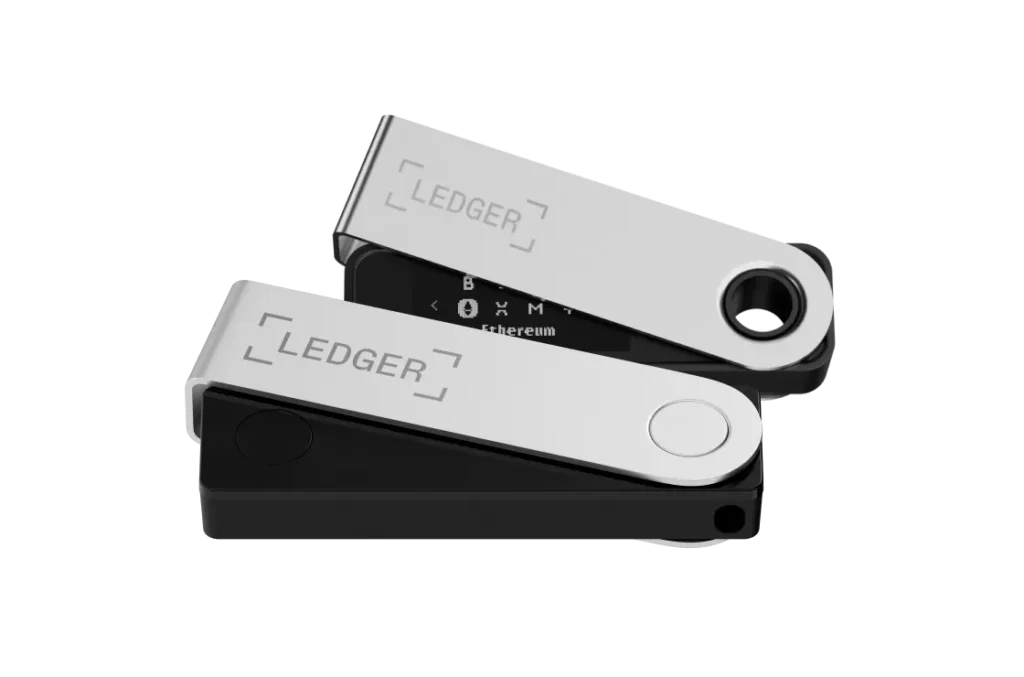
For holdings above $100,000, consider a multisignature solution through a service like Unchained Capital or Casa. These require multiple keys stored in separate locations to access your Bitcoin, providing bank-vault-level security.
The security learning curve is real but manageable. I spent about four hours learning to use a hardware wallet. That four hours protects potentially hundreds of thousands of dollars.
The key security rules:
Never share your recovery phrase with anyone. Write it on paper and store it in a fireproof safe or safety deposit box. Never enter your recovery phrase on a website or email. Use two-factor authentication on every Bitcoin-related account. Don’t tell people how much Bitcoin you own.
Risk #3: Regulatory Uncertainty
Governments around the world are still refining how they regulate Bitcoin. There’s a concern that new laws could restrict Bitcoin ownership, increase taxes on it, or create compliance burdens for business owners.
The reality in 2026:
The United States has moved firmly toward regulation rather than prohibition. Bitcoin ETFs were approved in 2024 and have been trading on major exchanges for two years now. Fidelity, BlackRock, and Goldman Sachs all offer Bitcoin products. The IRS treats Bitcoin as property with clear tax rules. Even during this drawdown, spot Bitcoin ETFs represent massive institutional adoption that didn’t exist in previous cycles.
The regulatory trend globally is toward integration, not restriction. Most developed nations have chosen to regulate Bitcoin within existing financial frameworks.
How to manage it:
Keep clean records of every purchase. Use tax tracking software like CoinTracker to generate accurate reports. Work with a CPA who understands cryptocurrency taxation. If you’re following the law and reporting properly, regulatory changes won’t threaten your holdings — they’ll just change the paperwork.
Risk #4: Technology Risk
Bitcoin is software. Theoretically, a catastrophic bug could be discovered, the network could be attacked, or the underlying cryptography could be broken by quantum computing.
Why this risk is lower than most people realize:
Bitcoin has operated continuously for over 16 years without a single successful attack on its core protocol. The network processes billions of dollars in transactions daily. Thousands of developers worldwide monitor the code constantly.
To understand just how secure and significant this technology is, consider the perspective of Major Jason Lowery, a U.S. Space Force officer, astronautical engineer, and MIT National Defense Fellow who researched Bitcoin for the U.S. Department of Defense. In his thesis “Softwar” and in his open letter to the Defense Innovation Board, Lowery argued that Bitcoin’s proof-of-work mechanism is far more than a financial tool — it represents a revolutionary advancement in how humanity secures digital information.
Lowery’s core argument is that Bitcoin’s proof-of-work converts the global electric power grid into what he calls a massive “macrochip” that physically constrains malicious actors and safeguards data traversing the internet. In his view, Bitcoin’s proof-of-work mechanism allows for cyber sovereignty by physically securing digital assets in a trustless, peer-to-peer manner — paralleling how nations secure the land, sea, air, and space domains through physical power projection. He describes Bitcoin as the most physically powerful and efficient power projection tool discovered by mankind, characterizing it as a non-kinetic defense system.
This isn’t coming from a random crypto enthusiast on Twitter. This is a U.S. Space Force Major who applied to serve as a military advisor on the National Security Council specifically to advise the Department of Defense on Bitcoin’s strategic significance. His book was even placed under a retroactive security and policy review by the Department of Defense — suggesting the Pentagon takes his thesis seriously enough to consider its national security implications.
The takeaway for business owners: the technology securing your Bitcoin is the same technology that a U.S. military officer believes should be integrated into America’s national defense strategy. Whatever you think about the broader geopolitical arguments, the underlying point stands — Bitcoin’s proof-of-work network is extraordinarily robust and secure.
The quantum computing concern is legitimate but distant. Current quantum computers are nowhere near powerful enough to threaten Bitcoin’s cryptography, and the development community is actively researching quantum-resistant upgrades well ahead of the timeline.
How to manage it:
Diversification. Don’t put 100% of your wealth in any single asset, including Bitcoin. A responsible allocation (5-20% of investable assets) limits your exposure if something completely unexpected happens.
Risk #5: You Make Emotional Decisions
The biggest risk isn’t Bitcoin itself — it’s you. Specifically, the risk that you’ll panic during a downturn and sell at the worst possible time, locking in losses instead of riding out the volatility.
This is the risk that actually destroys wealth. And right now, in February 2026, it’s the risk that’s most active. I’ve watched this play out repeatedly over nine years:
A business owner buys Bitcoin at $100,000, excited about the potential. Bitcoin drops to $65,000 (a 35% decline). The business owner panics and sells, locking in a $35,000 loss. Bitcoin recovers to new highs over the next 12-18 months. The business owner missed potentially massive gains because of a fear-based decision.
This is not hypothetical. I’ve watched friends and fellow business owners do exactly this in 2018, 2020, and 2022. Every single time, they regretted selling.
How to manage it:
Only invest money you genuinely don’t need for 3-5 years. If you’re losing sleep over Bitcoin’s price, you’ve invested too much.
Set up automatic purchases and don’t check the price daily. I check my Bitcoin portfolio maybe once a month. Obsessive price-watching leads to emotional decisions.
Write down your strategy before you start and commit to it. Mine is simple: “I buy a fixed amount every week regardless of price. I don’t sell unless I need the money for an actual purpose.” I wrote this down in 2017 and have followed it through every crash since.
How Bitcoin’s Risks Compare to Risks You Already Accept
As a business owner, you already manage risks that are arguably more dangerous than Bitcoin:
Employee risk: A single bad hire can cost your business $50,000-$200,000 in training, severance, lost productivity, and potential lawsuits.
Customer concentration risk: If one client represents 30% of your revenue and leaves, your business could be in serious trouble.
Market risk: A recession, new competitor, or industry shift could cut your revenue overnight.
Inflation risk: Keeping $200,000 in a business savings account at 0.5% while inflation runs at 4% costs you $7,000 per year in real purchasing power. This is a guaranteed loss that most business owners don’t even recognize.
Liability risk: A single lawsuit could threaten everything you’ve built.
Bitcoin’s volatility risk is no more dangerous than these risks you already navigate successfully. The difference is that Bitcoin’s risk comes with significant upside potential, while inflation risk is a guaranteed slow loss.
The Risk of Doing Nothing: The Real Threat to Your Wealth
This is the risk nobody talks about, and it’s the reason I wrote this article.
If you keep $200,000 in surplus business profits in a savings account for 10 years at 0.5% interest while inflation averages 3.5%:
- Year 1: Your $200,000 has the purchasing power of $193,000
- Year 3: Purchasing power drops to $179,000
- Year 5: Purchasing power drops to $166,000
- Year 10: Purchasing power drops to $138,000
You’ve lost $62,000 in real wealth by doing nothing. That’s not a risk — it’s a certainty.
And here’s what makes this even more painful: in the time you spend deliberating, inflation doesn’t pause. Every month you wait, your cash savings lose purchasing power. Every year you delay, the guaranteed loss compounds.
Bitcoin offers no guarantees. But a disciplined, long-term allocation strategy gives you a chance to preserve and grow your purchasing power rather than watching it erode.
After nine years of buying Bitcoin as a business owner, I can tell you this: the temporary pain of a 50% drawdown is nothing compared to the permanent pain of watching inflation destroy decades of hard work. The drawdowns end. The recoveries come. But the purchasing power your dollars lose to inflation never comes back.
Why Right Now Might Be Your Best Entry Point
I want to say something that might sound counterintuitive: if you’ve been thinking about starting your Bitcoin journey, the current drawdown might actually be working in your favor.
When Bitcoin was at $126,000 in October 2025, everyone wanted to buy. Now that it’s at $67,000, nobody wants to touch it. That’s human nature — we want to buy things when they’re expensive and popular, and avoid them when they’re cheap and feared.
But think about it from a business perspective. If a supplier offered you the same inventory at 47% off, you’d back the truck up. If a prime commercial property was selling at half its peak price with strong fundamentals, you’d find a way to make an offer.
Bitcoin is the same asset it was at $126,000 — same fixed supply of 21 million, same proof-of-work security, same growing institutional adoption, same fundamentals. The only thing that’s changed is the price, and the price is significantly lower.
History has shown that the most successful Bitcoin investors are the ones who bought when it felt the most uncomfortable. That feeling of discomfort is the price of admission for outsized returns.
The Business Owner’s Action Framework
If you’ve read this far, you understand both the risks of Bitcoin and the risk of doing nothing. Here’s how to move forward intelligently:
Step 1: Determine your risk allocation
Start with an amount that wouldn’t affect your business or your sleep if it dropped 50% tomorrow.
- Conservative approach (first-timers): $100-$250/week
- Moderate approach (after 6 months of experience): $250-$1,000/week
- Aggressive approach (experienced, high conviction): $1,000-$5,000/week
Step 2: Choose a secure platform
For buying and holding, I recommend River Financial for its clean interface, Bitcoin-only focus, and strong security features. For complete beginners who want the comfort of a well-known brand, Coinbase is a solid choice.
Step 3: Automate and forget
Set up automatic recurring purchases. Don’t check the price daily. Let dollar-cost averaging work for you over months and years, not days. This is especially powerful during drawdowns like the one we’re experiencing right now.
Step 4: Secure your holdings
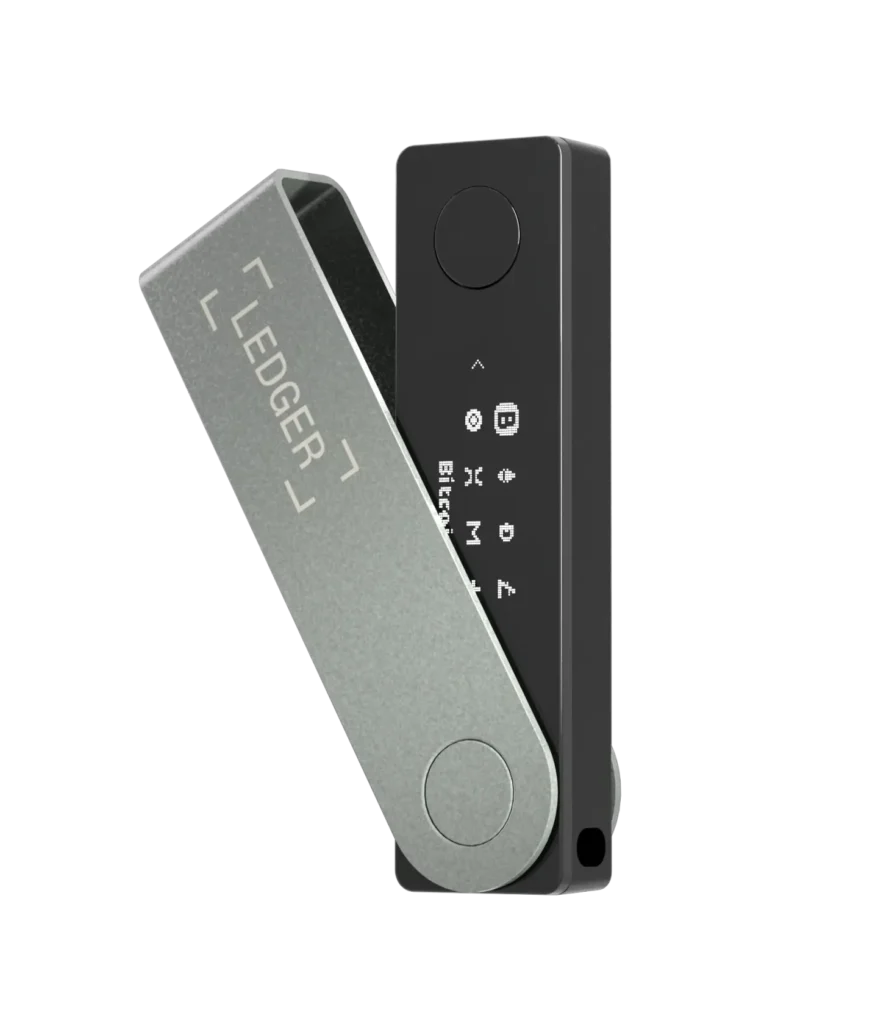
Once you accumulate more than $10,000, invest in a Ledger hardware wallet and move your Bitcoin to self-custody. This takes a few hours to learn and provides peace of mind that no exchange failure can threaten your savings.
Step 5: Keep clean records
Use tax software like CoinTracker to track every purchase automatically. When tax season arrives, you’ll have clean reports ready for your CPA.
My Personal Experience with the Risk of Doing Nothing
I’ll close with this: the best decision I ever made wasn’t buying Bitcoin. It was not doing nothing.
In 2017, I could have left my surplus business profits in a savings account like every other business owner I knew. It felt safe. It felt responsible. But I looked at the math — inflation eating 3-4% per year, banks paying next to nothing — and I realized that “doing nothing” was actually the most aggressive financial decision I could make. It was a guaranteed loss, compounding year after year.
So I started buying $250 per week in Bitcoin. Through the 2018 crash. Through COVID. Through the 2022 bear market. Through every headline screaming that Bitcoin was dead.
Those nine years of consistent buying through fear, uncertainty, and drawdowns changed my family’s financial future. Not because I was smart. Not because I timed anything. Because I refused to accept the guaranteed loss of inflation as my default strategy.
Right now, in February 2026, we’re in another drawdown. Fear is at extreme levels. The headlines are terrible. And I’m still buying my weekly amount, same as always. Because the data, the history, and my own experience all point to the same conclusion:
The biggest risk isn’t Bitcoin’s volatility. The biggest risk is doing nothing.
If you’re ready to start with a responsible, risk-managed approach, open an account with River Financial and set up a small automatic purchase. Start with an amount you’re comfortable with — even $50 per week. Then give yourself 12 months of consistent buying before you judge the results.
The best time to start was nine years ago. The second-best time is during a 47% drawdown when everyone else is afraid.
About the Author
I’m a small family business owner serving my local community. I’ve been buying Bitcoin since 2017 — nearly a decade of experience through multiple market cycles, including four major crashes. I’m not a financial advisor — I’m a business owner sharing what I’ve learned through years of real-world experience. Nothing on this site should be considered financial advice. Always consult a qualified professional before making investment decisions.